Ask most people what to do in Varanasi and you'll hear the same three answers: watch the Ganga Aarti, take a sunrise boat ride, visit Kashi Vishwanath. All three are worth doing, but they're also where every tourist ends up at the same time. Once you've ticked off the best ghats to visit in Varanasi, there's a quieter side of the city that most itineraries skip entirely — and it's often where Varanasi feels most like itself.
Here's where to go once you want a break from the crowds, without leaving the city's spiritual core behind.
Why Bother Going Off the Main Route?
Varanasi's headline sights are popular for good reason, but that popularity has a cost: peak-hour queues at Kashi Vishwanath, elbow-to-elbow viewing at the evening aarti, and boats jostling for space along the busiest stretch of the river. None of that is a problem on your first day, when you want the classic experience. By day two or three, though, most travellers start looking for somewhere they can actually hear themselves think.
The places below aren't secret exactly — locals know all of them well — they're just consistently left off the standard tourist route, which is precisely what makes them worth the detour.
1. The Monasteries of Sarnath, Beyond the Main Stupa
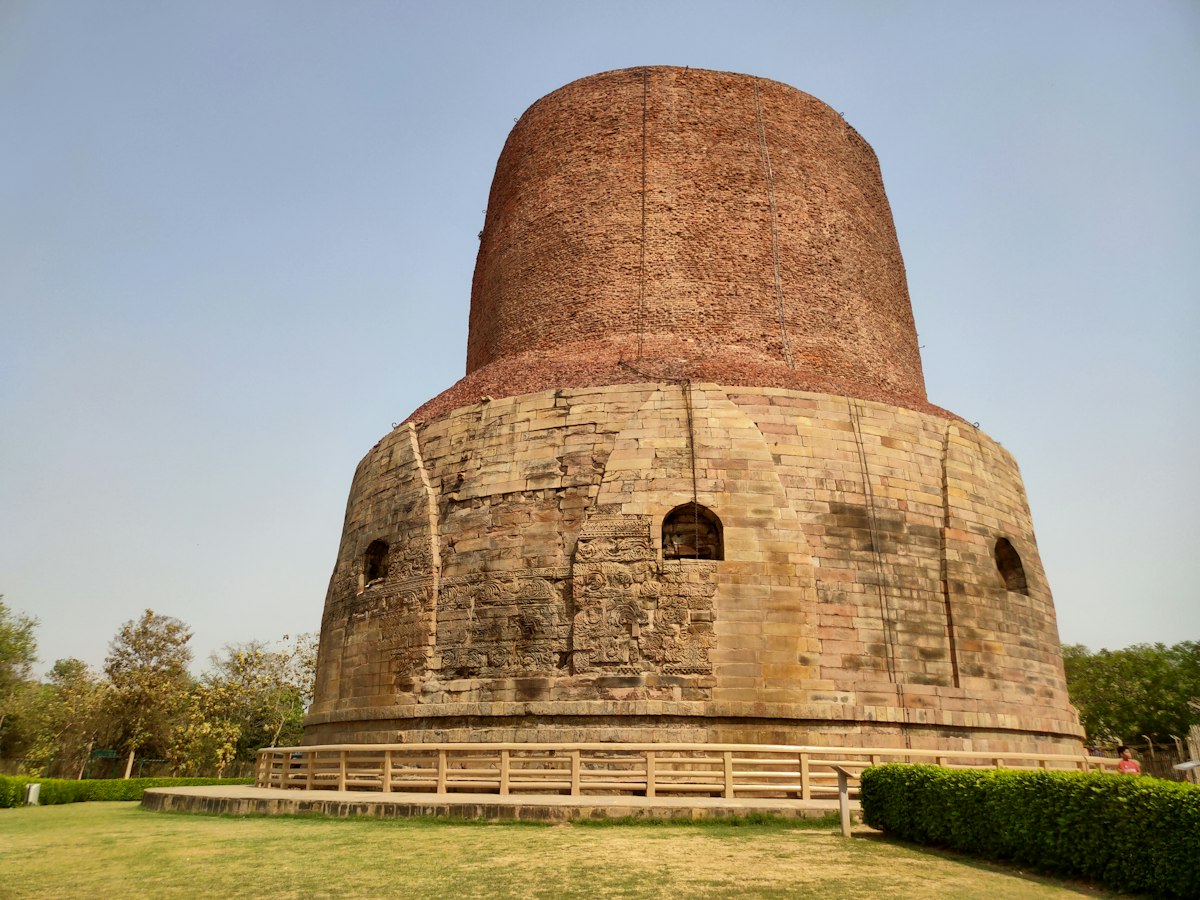
Most visitors to Sarnath stop at the Dhamek Stupa, take a photo, and leave. That's a shame, because the area around it is dotted with monasteries built by different countries, each with its own architectural personality, and almost none of the crowd that gathers at the stupa.
Thai, Tibetan, and Chinese temples
Within walking distance of the main site, you'll find a Thai monastery with sweeping golden roofs, a Tibetan temple with prayer wheels and vivid murals, and a Chinese temple built in 1939 with a distinctly different aesthetic from anything else in the area. Each one is quiet, free to enter, and rarely has more than a handful of visitors at a time.
Practical details
Sarnath sits roughly 10 km from central Varanasi, about a 30–45 minute drive depending on traffic. The Archaeological Museum nearby, home to the original Lion Capital of Ashoka, is generally open 10 AM to 5 PM and closed on Fridays, though it's worth confirming current hours and ticket rates locally since these change from time to time. For a fuller breakdown of what to see and when, a dedicated guide to Sarnath temple timings is worth reading before you go.
2. Kaal Bhairav Temple, the City's Other Guardian
While Kashi Vishwanath draws the long queues, Kaal Bhairav — dedicated to the fierce guardian deity said to protect the city — sees a fraction of the footfall despite being just as significant in local tradition. Many Varanasi residents visit Kaal Bhairav before Kashi Vishwanath, believing you need the guardian's permission before approaching the main deity.
The temple is compact, the atmosphere is intense rather than touristy, and you can usually get in and out within 20 minutes, even during a reasonably busy time of day. If you're building a route around the old city's smaller temples, it helps to check current Kaal Bhairav Mandir timings in advance, since darshan hours here differ from the main temple.
3. Nandeshwar Ghat, a Ghat Without the Crowd
Not every ghat in Varanasi is packed. Nandeshwar Ghat, a little away from the main tourist cluster, is clean, uncrowded, and has quietly become a favourite filming location for Hindi cinema over the years, with more than fifty productions shot along its steps. It's a good spot for an early morning walk if you want the riverfront atmosphere without jostling for space, and a genuinely peaceful place to sit with a cup of tea and just watch the river for a while, something that's difficult to do at the busier ghats further along.
4. Tulsi Manas Mandir
Built from white marble, Tulsi Manas Mandir is dedicated to the site where the saint-poet Tulsidas is believed to have written the Ramcharitmanas. What makes it different from other temples in the city is the walls themselves — carved and painted with scenes from the Ramayana, almost like a stone comic strip running around the building. It's a slower, more contemplative stop than the main ghats, and it rarely feels crowded even on weekends.
5. Ramnagar Fort, Across the River
Most visitors never cross the Ganga at all, which means Ramnagar Fort stays relatively untouched by the usual tourist rush. The 17th-century fort, still connected to Varanasi's former royal family, houses a museum with vintage cars, ivory work, old weapons, and an unusual astronomical clock inside its former Durbar Hall.
It sits about 14 km from the main railway station, reachable by road or, when river levels allow, by boat directly across from the ghats. It's typically open 10 AM to 5 PM, with separate entry fees for Indian and foreign visitors. Budget about two hours including travel, and go on a weekday if you want the museum largely to yourself.
6. Lolark Kund, an Ancient Stepped Well
Tucked near Tulsi Ghat, Lolark Kund is a deep, rectangular stepped well dedicated to the sun god, said to date back centuries. It's easy to miss if you're not looking for it, since it sits below street level and doesn't announce itself the way the temples do. On ordinary days, it's calm and largely empty; it's only during specific festival dates, particularly around late July and August, that it draws real crowds, so a visit outside that window gets you the site almost entirely to yourself. The stepped architecture alone is worth a few minutes, even if you're not there for a ritual dip.
7. The Back Lanes Between the Ghats
Some of the best parts of Varanasi aren't a single destination at all. The narrow lanes connecting the ghats to the main city — barely wide enough for two people to pass — are lined with small shrines, old havelis, silk weaving workshops, and tea stalls that have been run by the same families for generations.
Set aside an hour with no fixed plan and just walk. You'll pass more small, unnamed shrines and quiet courtyards than any list could capture, and that unscripted wandering is often what people remember most from Varanasi. Go in the late morning, once the sunrise crowd has thinned out but before the evening rush builds again, and you'll likely have entire stretches of lane to yourself.
How to Fit These Into Your Trip
You don't need to choose between the famous sights and these quieter ones. A practical way to split a three or four day trip:
- Day 1: Main ghats, evening Ganga Aarti, sunrise boat ride
- Day 2: Kashi Vishwanath and the old city lanes, Kaal Bhairav Temple
- Day 3: Sarnath's monasteries and museum, Tulsi Manas Mandir
- Day 4 (optional): Ramnagar Fort and Nandeshwar Ghat, at a slower pace
If you're short on time, even swapping one crowded afternoon for a visit to Sarnath's quieter monasteries or a walk through the back lanes will change how the trip feels.
Final Thoughts
Varanasi's famous sights earn their reputation, but they're only part of the picture. The ghats away from the crowds, the monasteries beyond the main stupa, and the lanes with no name are where the city slows down enough for you to actually notice it. Build in time for at least one or two of these, and your trip will feel less like a checklist and more like the place people keep coming back to.
Image credit: Dhamek Stupa, Sarnath. Photo by Braj Kishor on Unsplash.



No comments:
Post a Comment