Kashi Vishwanath is the temple most people picture when they think of Varanasi, and it's also the one first-time visitors get the most confused about. There's the free general darshan, a paid Sugam line, five different aartis with five different prices, and a security process that trips up anyone who didn't know phones aren't allowed inside. None of it is complicated once you've done it, but almost no one gets it right on the first try.
Here's what actually happens when you visit, what it costs, and what to leave at your guesthouse before you go.
General Darshan vs. Sugam Darshan: What's the Difference
The temple is open from 4:00 AM to 11:00 PM, and walking in for a standard darshan costs nothing. That's the good news. The less good news is that the free queue can run two to four hours on weekends and Mondays, which is when the temple gets busiest with local devotees as well as tourists.
Sugam Darshan is the paid fast-track option, priced at ₹300 per person and available from 5:00 AM. It moves you into a separate, much shorter line. You can book it online in advance or arrange it on the spot at the counter, though booking ahead removes one more thing to sort out on a morning when you're also trying to catch sunrise at the ghats. Whichever way you book, carry ID that matches the name on the booking exactly — Aadhaar, PAN, or passport all work, but a mismatch at the gate can mean starting over.
If your schedule is tight, Sugam is worth the ₹300. If you've built in a slower morning, standing in the free line isn't a bad way to spend an hour, since you'll be surrounded by people who've traveled a long way for this same fifteen minutes inside.
The Aarti Ceremonies, and Why There Are So Many
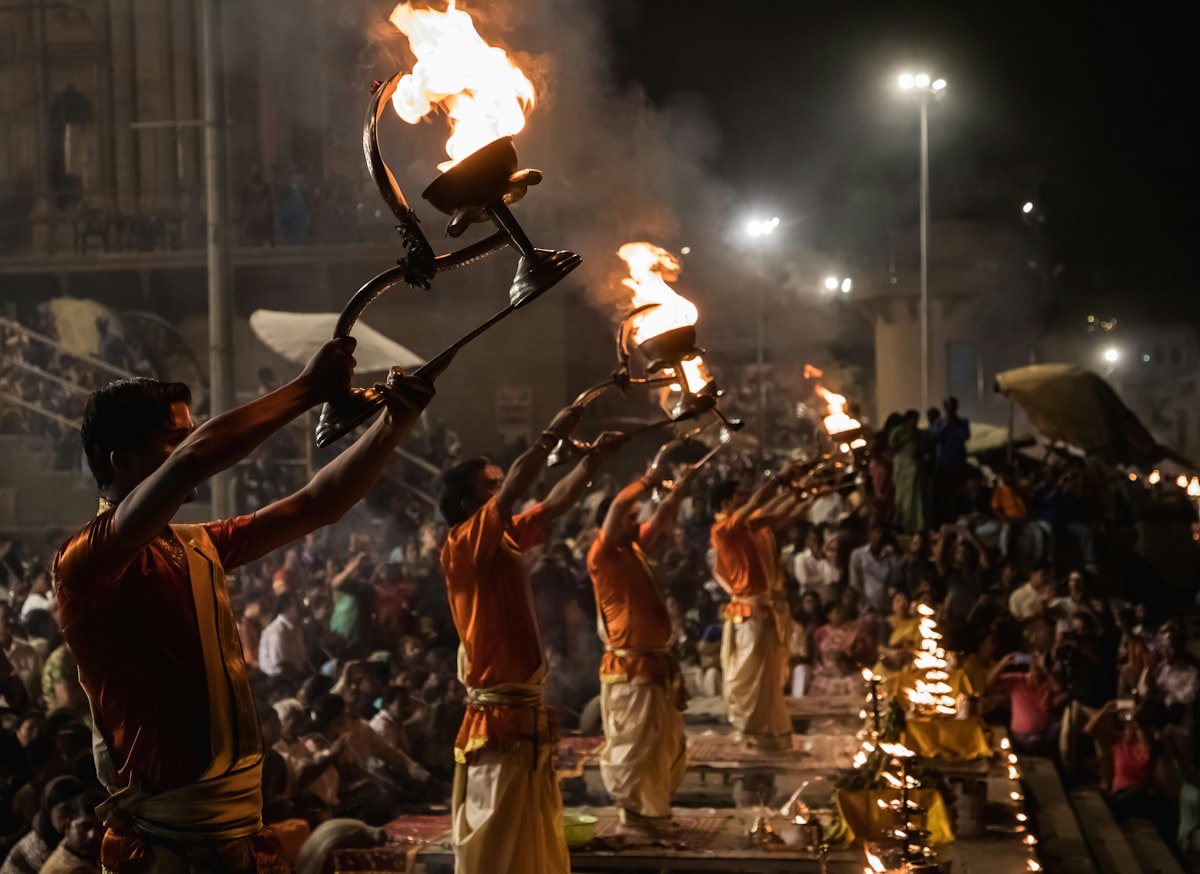
This is where most visitors get confused, because Kashi Vishwanath runs its own set of temple aartis that are separate from the more famous Ganga Aarti held every evening at Dashashwamedh Ghat. They're related in spirit but not the same event, and they're not interchangeable if you're set on seeing a specific one.
The temple's daily aarti schedule looks roughly like this:
- Mangla Aarti — 3:00–4:00 AM, ₹500, and the only one that requires booking up to 30 days in advance. This is the pre-dawn ceremony that opens the temple for the day.
- Bhog Aarti — 11:30 AM–12:00 PM, ₹180, booking recommended rather than mandatory.
- Sandhya Aarti — 7:00–8:15 PM, ₹180, the evening ceremony most visitors end up choosing since it fits naturally after a day of sightseeing.
- Shringar Aarti — 9:00–10:15 PM, ₹180.
- Shayan Aarti — 10:30–11:00 PM, ₹180, the closing ceremony that puts the deity to rest for the night.
You don't need to attend any of these to visit the temple. General and Sugam darshan both let you see the sanctum without booking a specific aarti slot. But if the idea of watching a ceremony rather than just passing through appeals to you, Sandhya Aarti in the early evening tends to be the easiest one to fit into a normal day, and it pairs well with the ghat-side Ganga Aarti happening around the same time a short walk away.
Dress Code and What You Can't Bring In
The temple expects modest, traditional dress. Kurtas, dhotis, sarees, and salwar kameez are all fine; shorts and sleeveless tops are not. Leather is the other rule people don't see coming — no leather belts, bags, wallets, or shoes are allowed past the entrance, which catches out a surprising number of visitors wearing an ordinary leather belt without thinking twice about it.
Mobile phones and cameras also stay outside. There's a cloakroom at the entry gate where you can deposit bags and phones before going through security, and a separate shoe rack for footwear. It's a straightforward system once you know it exists, but it means you should plan to arrive without your phone in hand for photos — the sanctum itself is a phone-free zone, and that's enforced.
Practically, this means traveling light on temple mornings. Leave the day bag, the camera, and anything leather at your guesthouse, and carry only your ID and enough cash for tickets or an offering.
Getting There and What the Morning Actually Looks Like
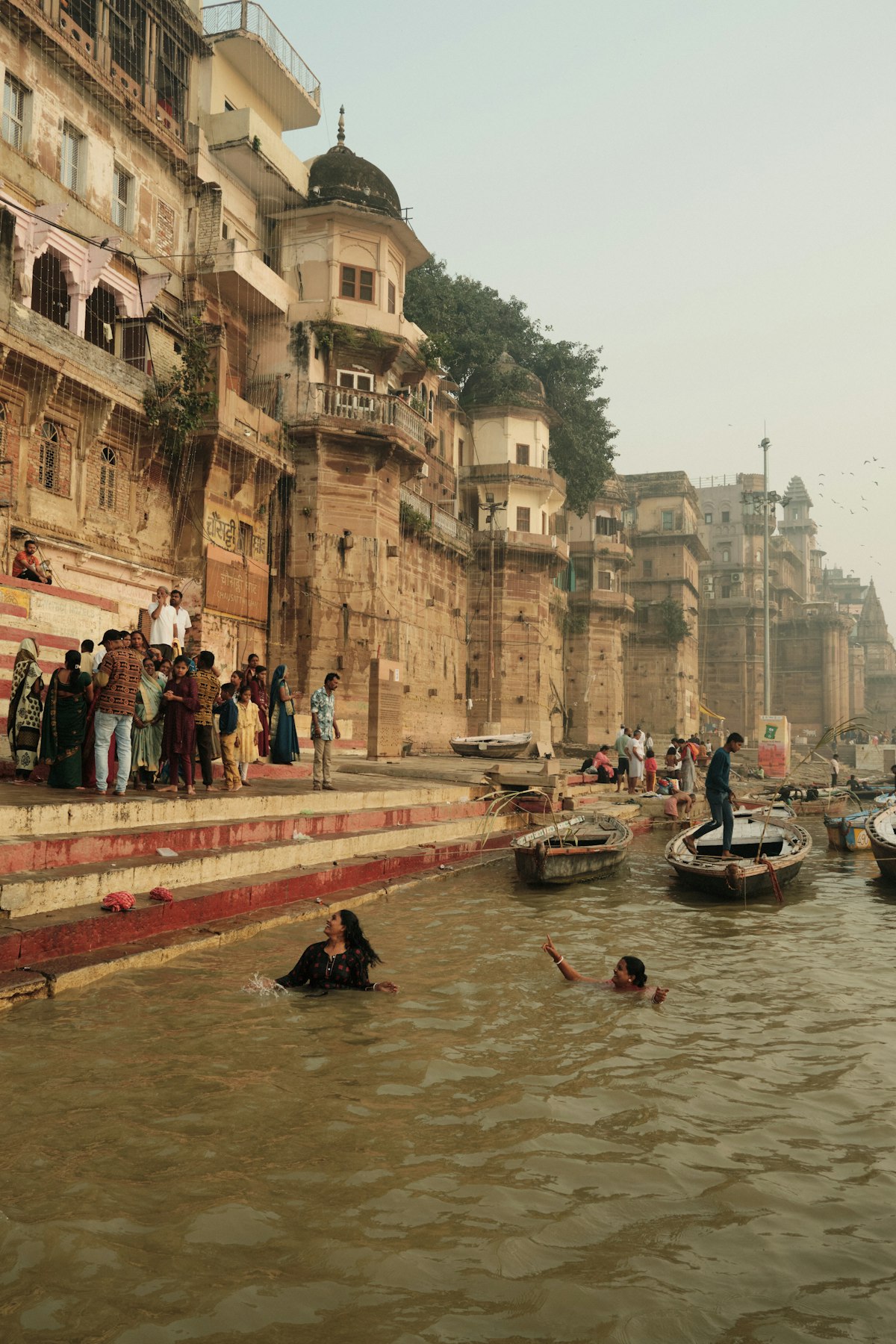
The temple sits in the maze of lanes near Vishwanath Gali, close enough to Dashashwamedh Ghat that most visitors combine the two. If you're staying near the ghats, it's a walk; if you're coming from further out, an auto will get you to the edge of the pedestrian zone, and you'll cover the last stretch on foot regardless, since vehicles can't follow you into the lanes.
Arrive earlier than you think you need to, especially for general darshan. The queue moves in switchbacks through a covered corridor, and while it's not uncomfortable, it is slow — this isn't a stop to squeeze in between two other plans. If you're combining it with a boat ride or an early walk through the ghats, our three-day Varanasi itinerary shows where the temple fits naturally into a longer morning without throwing off the rest of your day.
Security is airport-style: a metal detector, a pat-down, and a check that you're not carrying anything on the prohibited list. It moves faster than it sounds once you're used to having nothing but ID and cash in your pockets.
A Few Things Worth Knowing Before You Go
The temple gets genuinely crowded on Mondays, since the day is associated with Lord Shiva, and on weekends when domestic pilgrim numbers rise. If your dates are flexible, a weekday visit outside of festival periods is a noticeably calmer experience.
Kaal Bhairav Temple and Annapurna Temple both sit close to the main complex and are easy to add to the same outing if you have an hour to spare — neither requires the same booking process, and both are covered in more depth in our guide to hidden gems in Varanasi beyond the ghats and crowds.
And if this is your first trip to the city and the whole idea of navigating temple rules, boat timings, and old-city lanes feels like a lot at once, it's worth starting with our broader guide on planning your first trip to Varanasi before narrowing down to the temple specifics here.
Final Thoughts
Kashi Vishwanath rewards a bit of preparation more than almost any other stop in the city. Know which darshan you want, dress the part, leave your phone behind, and budget more time than feels necessary — do that much and the visit runs itself. Everything else, the queue, the security line, the walk through the lanes, is just part of arriving at a temple that's been receiving pilgrims for longer than most buildings anywhere have stood.
Image credits: Photo by Raju kumar and Photo by Austin Curtis, both on Unsplash.



No comments:
Post a Comment